
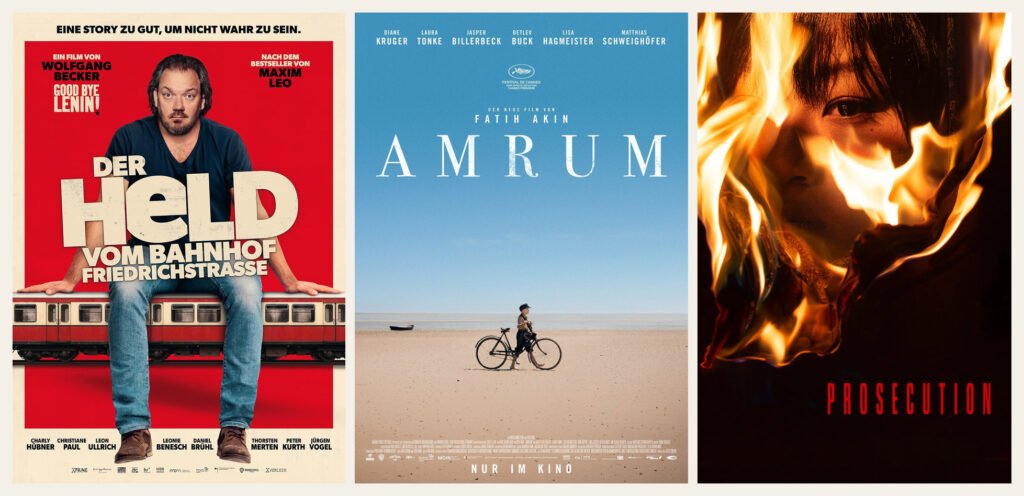
A key location in the film Der Held vom Bahnhof Friedrichstraße — known internationally as Berlin Hero — took me back to my decade living and working as an actor, writer and filmmaker in West Berlin during the 1980s.
Before the Berlin Wall finally came down in 1989, Friedrichstraße station was the gateway for my regular day trips into East Berlin. To get there, the West Berlin U-Bahn crept beneath the Wall through East Berlin, where armed DDR guards watched silently from dim ghost stations before the single stop at Friedrichstraße — less a normal railway station than a border crossing into another era.
I remember the compulsory currency exchange: five West Marks officially swapped for five Ostmarks, while the real spending money stayed hidden in coat linings, exchanged in any West Berlin bank at ten-to-one. If I got lucky, that money bought me a coveted ticket to the Berliner Ensemble or Volksbühne theatres, where the heavy waft of state-manufactured F6 cigarettes created a theatrical atmosphere for highly charged audience debates spiced with Brechtian irony. It was unlike anything I was hearing in the West.
All of this came flooding back as I watched three standout films from this year’s German Film Festival in Melbourne — Berlin Hero, Amrum and Prosecution. All three films ask the same unsettling question in quite different ways: Who ultimately gets to narrate history and current reality in modern Germany?
Produced by X Filme Creative Pool — the company associated with successful productions ranging from Babylon BerlintoThe Queen’s Gambit— Berlin Hero became the final completed film by Wolfgang Becker, the director of Good Bye, Lenin!
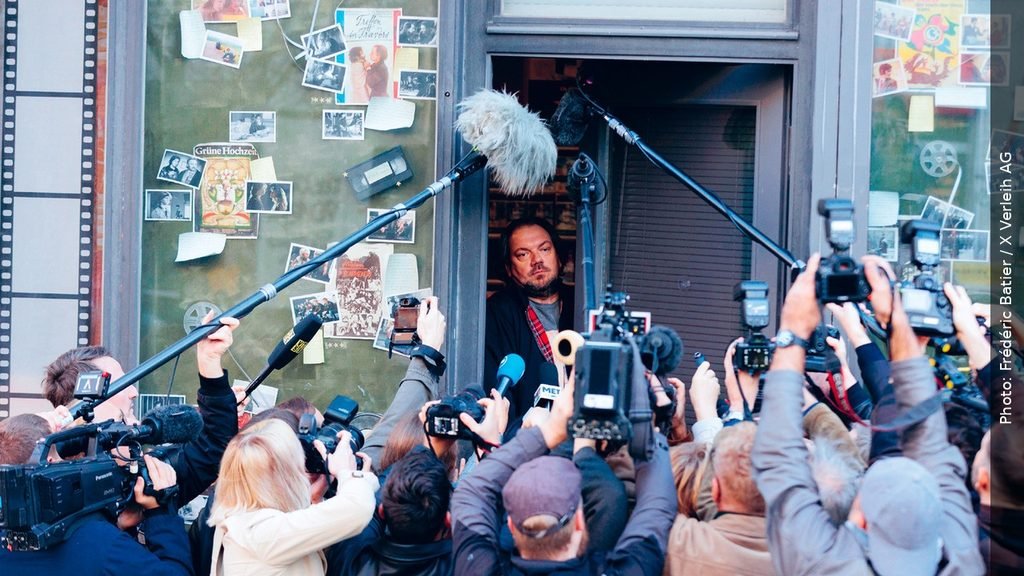
Its fictional premise is absurdly simple: a humble Berlin video-store owner accidentally becomes mythologised as the heroic engineer who secretly redirected underground trains to help East German passengers escape into West Berlin. Midway through the film, we discover the “hero” never redirected any trains at all. The escape route existed accidentally — and his only heroic act was remaining silent at the time.
Needing the money, the hero then allows others to transform him into a post-reunification icon. But everything begins to derail once the machinery of myth-making is activated: The newspaper that scooped the story risks exposure as part of the fabrication. The ghost writer fears losing his literary prize. Politicians and the media exploit the story’s emotional usefulness. Even the office of theBundespräsident suppresses archive material that might disrupt the myth.
This becomes the perfect delivery mechanism for the film’s central leitmotif: Die deutsche Geschichte ist die Lüge, auf die man sich einigt — German history is the lie people ultimately agree upon.
Crucially, Becker’s final film refuses the simplistic Cold War morality tale in which only the DDR manufactured myths. Certainly, East Germany sustained itself through ideological surveillance, censorship and carefully managed narratives. But Berlin Hero quietly suggests that both West Germany and today’s reunified Germany have also adopted interpretations of history that required a degree of selective amnesia.
Warm, funny and melancholy, Berlin Hero exemplifies the well-crafted tragicomic cinema that contemporary Germany now exports so successfully. But its humour is the vessel for an unsettling assertion that collective memory can all too often become less historical fact than negotiated consensus. And Friedrichstraße station itself — part historical site, part mythological theatre, part emotional borderland — becomes the perfect symbol for that instability.
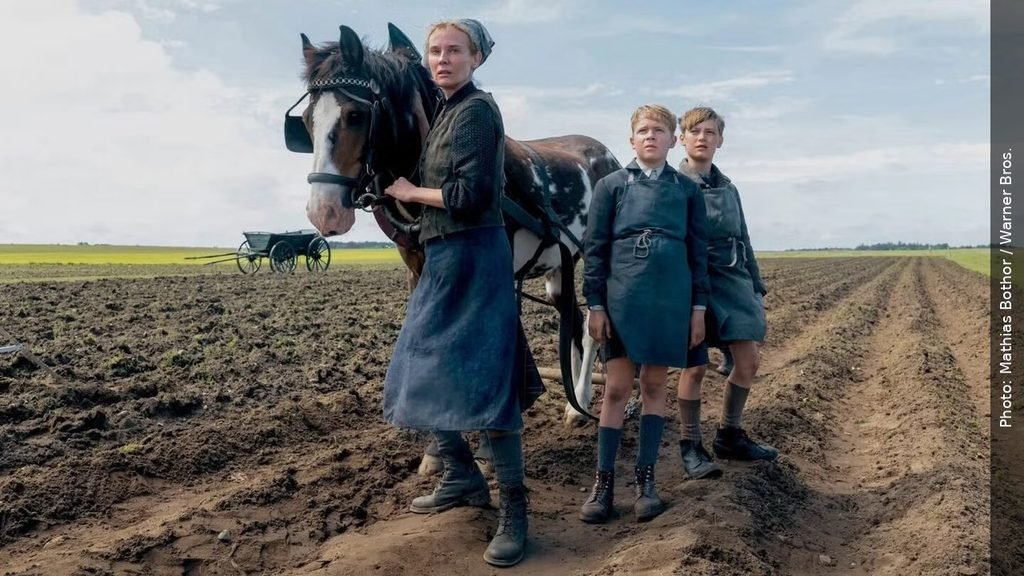
Examining history from a very different angle, another film from this year’s festival returns to Germany’s continuing engagement with the traumas of the Second World War. Fatih Akin’s film Amrum takes us not into contemporary institutions or Cold War myth-making, but back to the emotional ruins of Germany following Nazi capitulation in 1945.
Many war films ask: How did the catastrophe happen? Amrum asks a different question: What do we carry with us after the catastrophe has passed? Seen largely through the eyes of a young boy on the remote North Sea island of Amrum, the film unfolds in the final days of the war.
Yet unlike many war films, its subject is not military conflict but emotional debris — defined by hunger, silence, shame, memory and loss — and the psychological aftershocks left in its wake. The central story follows a twelve-year-old boy, played with restrained emotion by Jasper Billerbeck, whose seemingly simple mission is to satisfy his mother’s craving for the scarce wartime staples of white bread, butter and honey.
What begins as a child’s quest gradually becomes a portrait of a society trying to restore a shattered sense of normality. Here, the windswept island itself becomes less a setting than a reflection of its inhabitants’ state of mind — isolated, haunted and struggling with the challenge of having to rebuild their lives.
Particularly resonant is director Akin’s suggestion that history can never really be banished into the past. It survives in silences, landscapes and inherited memories long after the traumatising events themselves have ended. In doing so, the film touches upon something central to modern German culture: the belief that Vergangenheitsbewältigung — coming to terms with the past — is not a one-off task that can be completed and then forgotten. Like democracy itself, it requires continual self-examination and a willingness to revisit uncomfortable truths.
At a time when some societies seem increasingly tempted to sanitise, revise or simply bury uncomfortable chapters of their history, Amrum quietly charts a different path by suggesting that historical honesty is not a final destination, but an ongoing civic responsibility.
It is worth noting how contemporary German cinema continues to sustain the conversation about memory beyond the generation that directly experienced past wars. This can be seen as part of a broader commitment to help younger generations make sense of contemporary conflicts and decide what sort of societies they wish to build and protect.
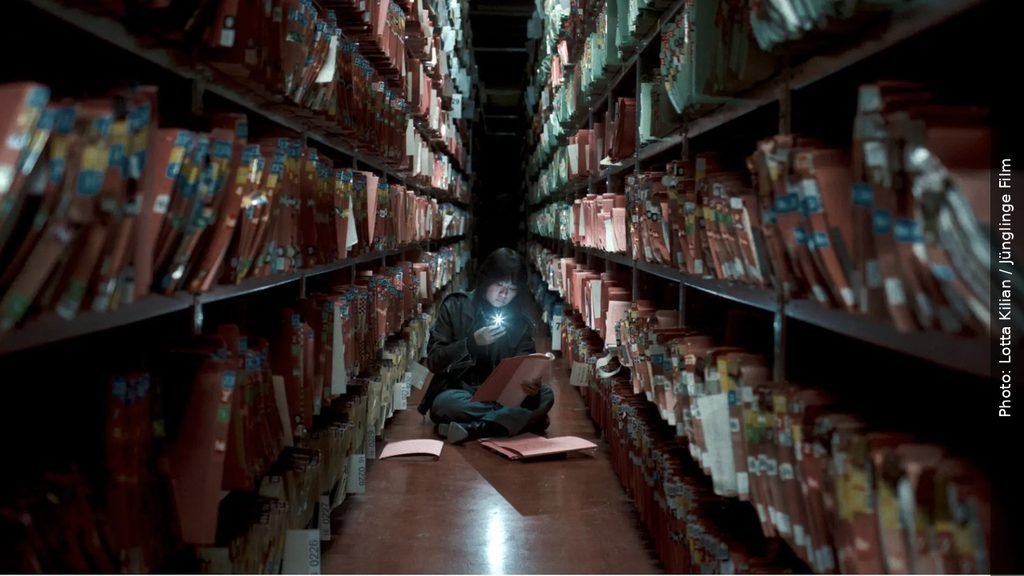
The same concern with balancing memory, truth and accountability resonates in my third film, Prosecution — another Berlinale success story, though operating in a very different register. Where Berlin Hero explores the instability of historical memory through bittersweet tragicomedy, and Amrum examines the traumas of coming to terms with the past, Prosecution tackles the present tense directly through the legal thriller genre.
The film follows Seyo Kim, a young German-Korean public prosecutor confronted by racist violence and institutional denial inside the very justice system supposedly designed to protect democratic order. And again, the real subject here is not simply crime. It is narrative control. Far more evocative in German than the export title Prosecution, the word Staatsschutz literally means Protection of the State.
But protection of whom? The citizen being attacked by far-right extremists? Or Germany’s self-image as a functioning liberal democracy that has learned from its past and has – as is twice asserted in the film – the most objective legal system in the world?
Director Faraz Shariat understands that contemporary German cinema occupies a fascinating international position. He and many German filmmakers are telling politically urgent stories that function simultaneously as gripping entertainment and acts of national self-interrogation. Courtrooms. Police systems. Archives. Bureaucracies. Borders. These have become some of the new battlegrounds of German cinema — places where democracy either proves itself… or quietly fails.
Prosecution derives its potency from its refusal to present racism simply as an extremist aberration. Instead, the film shows how public institutions themselves can proceduralise and soften systemic violence until it begins to be seen as a mere administrative issue. Like Berlin Hero and Amrum,this is also a film about negotiated reality — about the stories societies tell themselves in order to remain functional. One film explores fabricated memory. Another inherited memory. The third contested memory.
Viewed together, all three films suggest that contemporary German cinema is asking one overriding question above all others: not just whether history can be remembered truthfully, but whether any modern democracy can survive without continually re-examining its relationship to truth itself.
This is not cinema made only for festival aficionados. These are films supported by a sophisticated ecosystem bringing together a vast creative industry led by indie producers, public broadcasters, regional film funding bodies and an array of film festivals like the A-list Berlinale.
And they are consciously reaching outward: to streaming audiences, arthouse fans, international festivals, and to other societies grappling with their own crises of truth, democracy and historical memory.