
Who doesn’t love a great Hollywood movie? How can we forget Brando in The Godfather (1972), De Niro in Taxi Driver (1976), or the twisted science fiction of Blade Runner (1982)?
But I’ve always had a penchant for American films made outside the Hollywood mainstream, often by European-inspired auteurs: Martin Scorsese drawing us into his gritty Mean Streets, David Lynch’s cult odyssey Eraserhead, or Quentin Tarantino’s violently hilarious Reservoir Dogs.
So, faced with an impressive offering of 175 films from 31 countries at this year’s Melbourne International Film Festival, I dived into three brand-new American indies, shipped over with no tariffs attached, where laughter seems designed to mask more serious intentions.
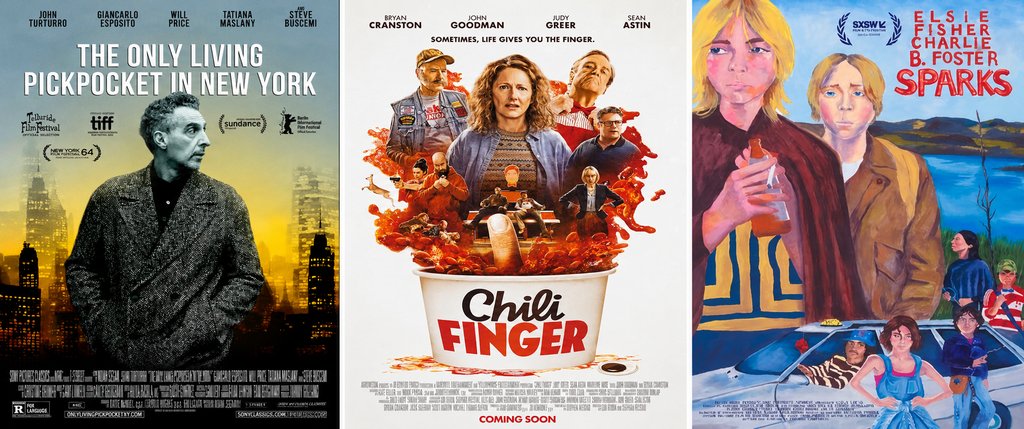
The Only Living Pickpocket in New York, Sparks and Chili Finger — three very different films from the land of the free and the home of the brave. But what does freedom from the Hollywood mainstream actually allow their filmmakers to do?
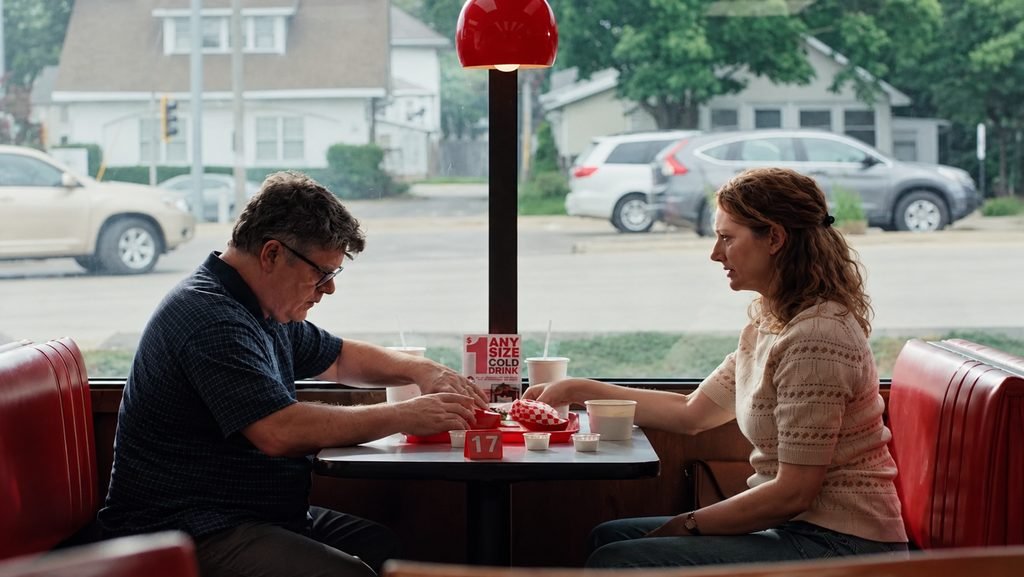
After laughing while cringing through Chili Finger, co-directed by Edd Benda and Stephen Helstad, I wondered whether its dark-meets-grotesque formula could escape the very long shadow of the Coen brothers.
A haunting yodel drops us into provincial America, where a cash-strapped lawyer plants a severed finger in her chilli con carne and extracts a six-figure settlement from a fast-food chain. When the owner sends a dodgy fixer to discover where it came from, one bad decision breeds another until black comedy becomes brutal farce.
Judy Greer is terrific as an empty nester whose depression is miraculously cured by a hundred-thousand-dollar cheque, while Sean Astin turns suburban normality into a running joke. It’s funniest when ordinary people treat increasingly insane consequences as somehow manageable. Yes, Fargo is lurking around almost every provincial corner, but Chili Finger gradually earns its own flavour through sheer commitment to escalation.
Guns, crossbows, burning barns — and one extremely unfortunate moose. It doesn’t reinvent American black comedy, but it serves up a pretty spicy variation. Its indie credentials are both comically and tragically on brand. Benda’s production company is called Go Beyond the Porch, while collaborators Yellow House declare that stories can change the world.
So gather your tribe, beg, borrow or even remortgage your house to secure the resources — and make your damn movie before somebody convinces you not to.
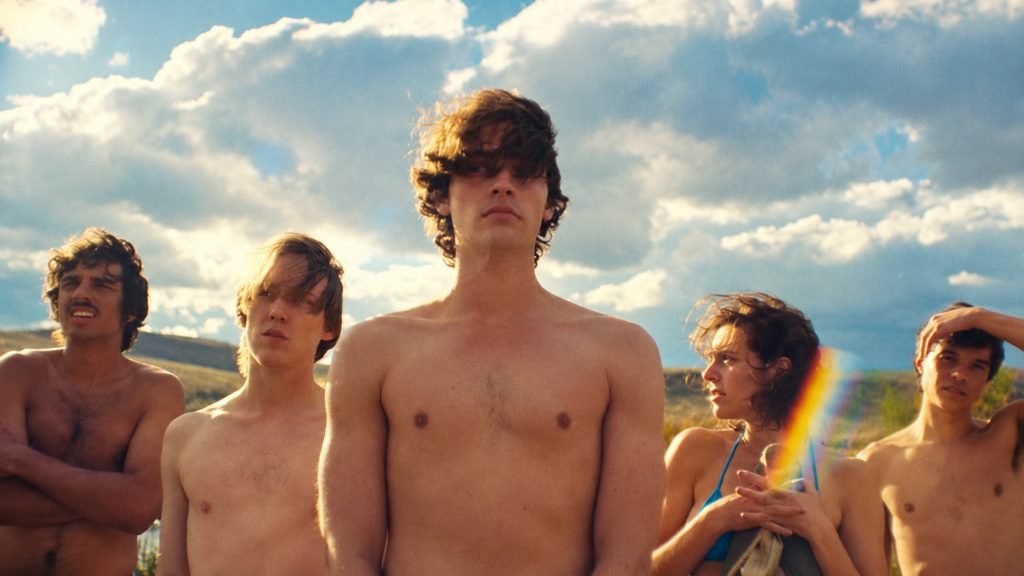
Fergus Campbell’s debut Sparks operates on an even more handmade register. Small-town Nevada teenagers become obsessed with finding a time portal to 1960s Paris, where Cleo, played by Elsie Fisher, dreams of acting for the great avant-garde director Jean-Luc Godard.
The film announces its personality immediately. Cleo feeds coins into an old cigarette machine right in the middle of a country road and pulls out a dog-eared book about Godard. When she asks her gang if they know what the French nouvelle vague was, one kid replies, “I thought it was a cocktail.”
The gag captures what I liked about Sparks. It is knowledgeable about film culture without being too reverential, queer in its spectrum of characters without turning sexual orientation into a lesson on identity, and refreshingly youthful in its slightly nostalgic belief that adoring old movies might actually open a portal to a new world.
Campbell wears his influences proudly, drawing on indie pioneers Richard Linklater and Wes Anderson, both celebrated for their ensemble filmmaking. Animated captions, Super 8 footage and giant black-and-white projections at a drive-in cinema turn low-budget necessity into a lo-fi aesthetic.
Handmade? Definitely. Amateur? Only in the word’s original sense — made for the love of it.
For my money, the most accomplished of the three American indies is Noah Segan’s The Only Living Pickpocket in New York, with John Turturro masterfully lived-in as Harry, an ageing Bronx fingersmith whose analogue craft is becoming obsolete in a cashless city.
Harry can still lift wallets from distracted commuters, but credit cards can be cancelled. And the valuable thing he accidentally steals turns out to be a digital wallet belonging to the wrong young, cynical rich kid from a crime family who is devoid of any semblance of empathy for Harry or his ailing wife, Rosie, whom he cares for when he’s not picking pockets.
Suddenly, an old crook has to outwit a new criminal economy to protect his helpless wife. Steve Buscemi, as Harry’s old fence handling stolen goods at the pawn shop, and Giancarlo Esposito, as an NYPD cop from his past, evoke the city that never sleeps — the New York we remember from countless movies, music and songs.
But nostalgia isn’t merely decoration here. Harry is feeling it badly too, as his city, his family and even his criminal usefulness disappear around him. Turturro successfully rescues Harry from becoming a sentimental, lovable rogue. Every deft movement suggests decades of practice as a thief, while his devotion to Rosie gives the chase stakes greater than the stolen loot.
This is a crime movie about becoming obsolete. And here the indie story comes full circle.
Segan spent years trying to get the film made. A creative friendship stretching back to Rian Johnson’s debut film, Brick, eventually brought Johnson and co-producer Ram Bergman aboard through their production company, T-Street, with backing from MRC. Johnson and Bergman built their careers by betting on projects and protecting creative control — the instinct that took their independently made Knives Out into the mainstream.
That’s the kind of stick-your-hand-in-your-pocket indie mythology I still find irresistible. Independence doesn’t have to mean having no money, stars or Hollywood connections. With producers who live and breathe cinematic storytelling, it can mean asserting enough freedom to make the film on its own terms — and then deciding who gets through the door afterwards.

Chili Finger, Sparks and The Only Living Pickpocket in New York all shamelessly borrow earlier cinematic languages: The Coens, the French New Wave and old New York crime movies. What lifts them out of their idols’ shadows is what they do with these influences once they’ve borrowed them.
So here’s my indie film takeaway: the most important freedom going indie buys you isn’t freedom from influence, or even liberation from financial reality. It’s the freedom to be peculiar, local, deeply personal — and occasionally brave enough to put your own money, reputation or even the odd severed finger where your mouth is.