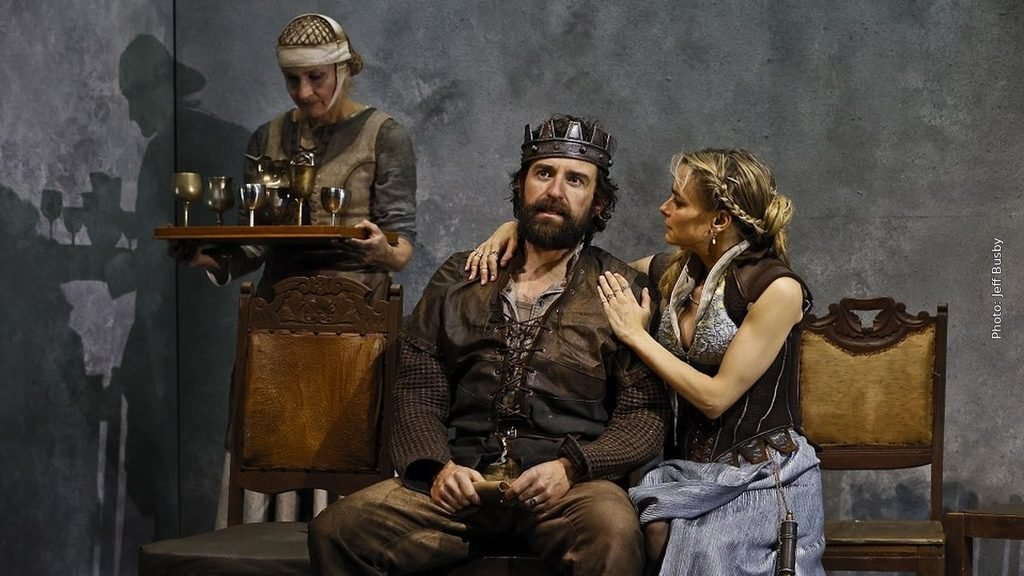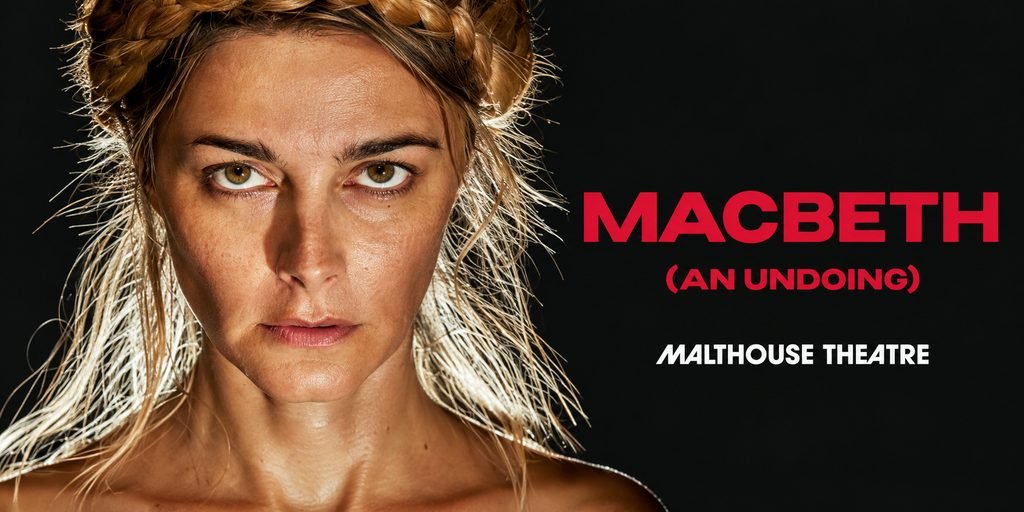
Last week, I went to the red-carpet opening of Macbeth (An Undoing) at Melbourne’s Malthouse Theatre, a boozy theatrical edifice built in 1892 by Castlemaine Brewery, then the largest in Australia. Since 1990, this former brewery turned cutting-edge theatre has been, to paraphrase its website, “a home for adventurous artists engaging audiences with the latest in theatrical thought”.
I felt that a repurposed venue like the Malthouse was an ideal stage for a modern reimagining of Shakespeare’s classic horror story of Macbeth, while the subtitle An Undoing promised an analytical deconstruction of our perspective on the play for a contemporary audience.
Queuing to get into the theatre, a loud lady in the audience informed me — and everyone else in the vicinity — that the big question about Macbeth on the Australian school curriculum was whether Lady Macbeth, the murderous instigator, was equally culpable for her husband’s bloody murders. I wondered aloud what the old Bard would have made of today’s feminist analysis of his characters, or indeed, of the fact that female roles are now actually played by women, rather than the boy actors who donned tights and frocks during the Elizabethan era.
Will Shakespeare would have been more than curious to learn about his legacy in the 21st century. And I’m still not sure whether I actually saw or merely imagined the Bard arriving incognito among the eager ticket holders, shoving his way through the throng to see this new take on Macbeth, told from the perspective of his famous Lady, and hoping it wouldn’t be his literary career’s posthumous undoing.
Right at the beginning of the performance, a haggard witch had warned the full-house audience, in plain English, that there would be “no lightning and no rain, just the play”. But as the hurly-burly unfolded, Shakespeare had morphed into my plus-one. He was completely familiar with the roles of Musical Composer, Fight Choreographer, plus Set and Costume Designer. But with a shush from someone behind me, I stopped mumbling my explanation of how the Lighting Designer was literally engaged in electrifying the audience, while the Sound Designer was in cahoots with the Intimacy Coordinator.
I couldn’t help whispering whether William was amused or horrified by Edinburgh-based British playwright, screenwriter and director Zinnie Harris’s translation of his original play into contemporary English. He seemed sceptical, not just about the linguistic update, but also how freely Zinnie had taken creative licence to chop up the story and leave critical scenes on the proverbial cutting-room floor. Not that Shakespeare quite knew what the phrase meant. He only recently picked it up somewhere.
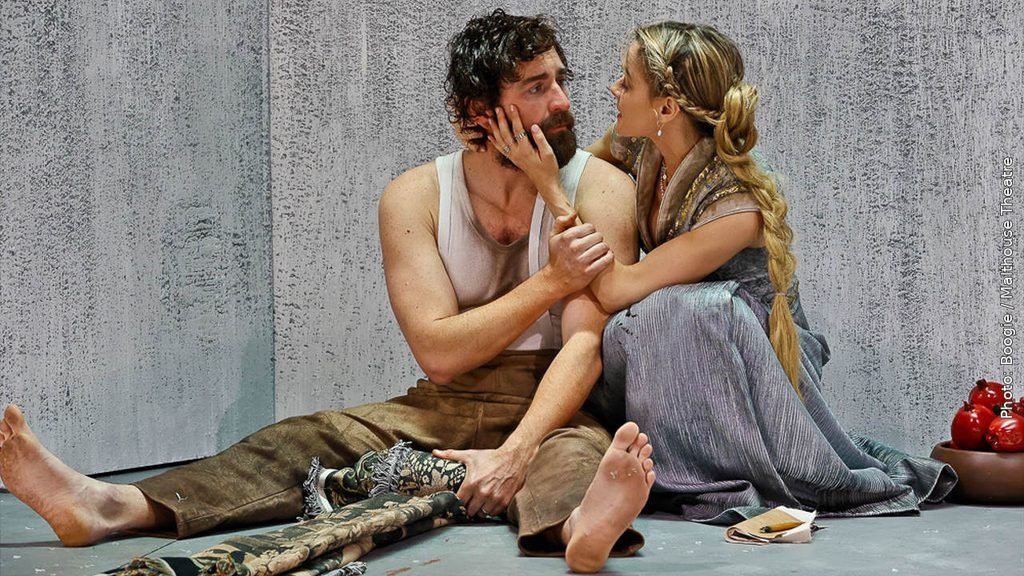
The show’s subtitle, An Undoing, plays on Lady Macbeth’s infamous line, “What’s done cannot be undone.” And so I had to accept that the modern English translation was what it was: a way to get more bums on those comfy theatre seats. I found myself explaining to Incognito Will that today’s theatre industry sometimes finds it necessary to help modern audiences understand his 17th century prose.
I assured him this was not necessarily a case of his play becoming a victim of modernity, but a dramatic device designed to prevent his work from sinking into obscurity. I cited the press release, which promised “a powerhouse performance of Lady Macbeth that defines our time”. But he seemed fairly set on remaining in a wait and see mode.
After the show over a hard-earned stout in the foyer, my plus-one Bard quoted one of his lines and asked: “Where is the darkness?” And despite the bloodied bodies we had witnessed walking the boards, we found ourselves in agreement that this was a Shakespeare-lite rendering of a story largely devoid of the chilling darkness, wickedness, bloodlust and brutality for which it is renowned.
And yes, we did roll our eyes at the scene where Lady Macbeth walked off the stage to lecture the audience about the inadequacies of her role! “Give me a Breaking Bad!” sighed Will. I did a double take and thought, has Shakespeare been watching Netflix?
On the upside, Shakespeare was absolutely thrilled by Artistic Director Matthew Lutton’s visually arresting merry-go-round of a stage at the Malthouse, which ingeniously revolved from scene to scene, giving the transitions a filmic pace. At one point, as the actors moved from one revolving backdrop to the next, we were transported back to the 11th century — where the Macbeths were at their wickedest — determined to claim the throne they fervently believed was their destiny.
But believe it or not, when Macbeth himself uttered the line, “Why real lace? They could have just given me Velcro!”, I really heard the Bard muttering into his newfangled white stout: “When the hurly-burly’s done, when the battle’s lost and won.”
Maybe the Bard could forgive the modern language, but it was the missing darkness he found hardest to swallow.