For this balletic beginner, a night at the ballet began with the excitement of a child being taken to the circus. I can just about tell a pas de deux from the splits. But you don't need to be a circus expert to gasp when someone flies through the air. With this in mind, I packed my binoculars, ready to take in Stuttgart Ballet's production of Tchaikovsky's The Sleeping Beauty, returning to Australia after more than four decades.
Stepping out of Flinders Street Station on a balmy spring evening, I found Melbourne already staging its own overture. A hippie-looking fellow was beatboxing John Lennon's Jealous Guy, while diagonally across the road, outside St Paul's Cathedral, a man was telling an angry woman that Jesus had come to warn us we're all tainted by sin. And all this before I had actually reached the theatre.
At the grand old Regent in Collins Street, the audience swept up the staircase beneath chandeliers, dashed for drinks, and then squeezed into the gloriously ornate auditorium — a circus tent fit for royalty.
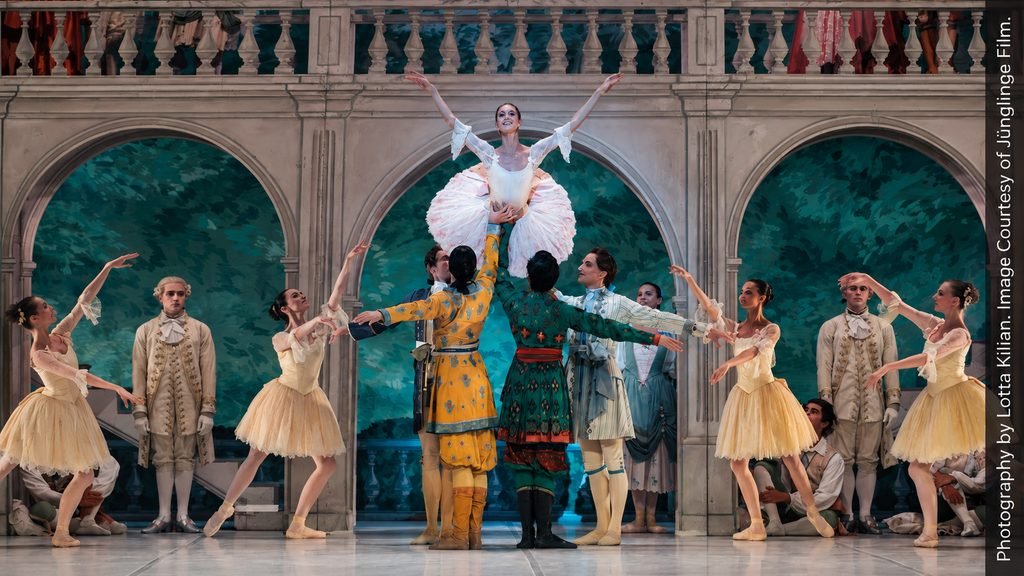
Brazilian prima ballerina Marcia Haydée first staged Stuttgart Ballet’s production of Tchaikovsky's The Sleeping Beauty in 1987 — during my black-red-gold decade living in Germany — with choreography by Haydée after the great nineteenth-century ballet master Marius Petipa. Nearly forty years on, this Sleeping Beauty is most definitely still wide awake.
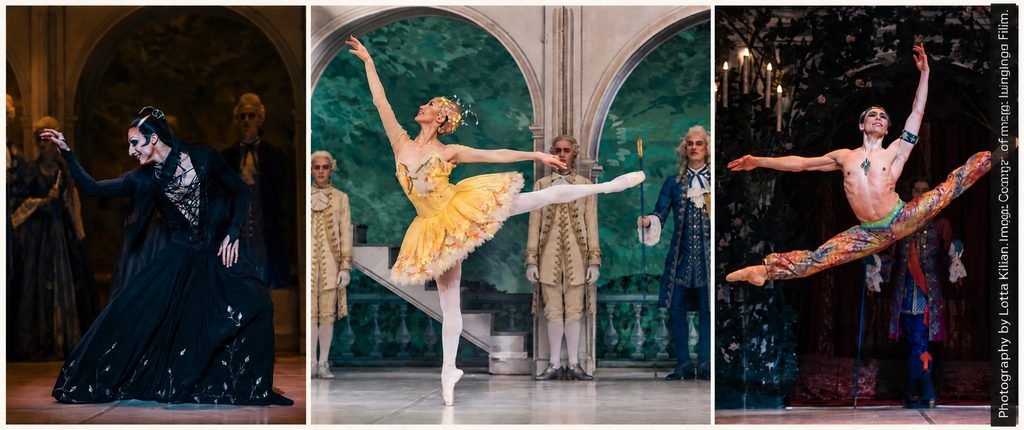
Jürgen Rose's sets and costumes conjured an extravagant fairy-tale court: arches, candelabras, shimmering fabrics and colours that seemed to dance in their own right. The Regent was the perfect frame. There were moments when I couldn't tell where the theatre's grandeur ended and the stage fantasy began.
Then came the fairies, each bringing a distinctive flourish to their solo with an apparent determination to outdo the last. From my dress-circle perch, it was like watching exceptionally elegant breakdancers battle it out. A leap, a turn, an impossible balance — and just as I'd absorbed one spectacular display, along came another.
And then… thunder, darkness, and Carabosse — the wicked fairy — arrived in black, flinging her costume about like an octopus stung by its own ink. Suddenly the fairy tale had teeth. With a percussion accent, a change of lighting, or the dark fairy crossing a suddenly blacked-out stage, sumptuous spectacle could turn aesthetically austere in an instant.
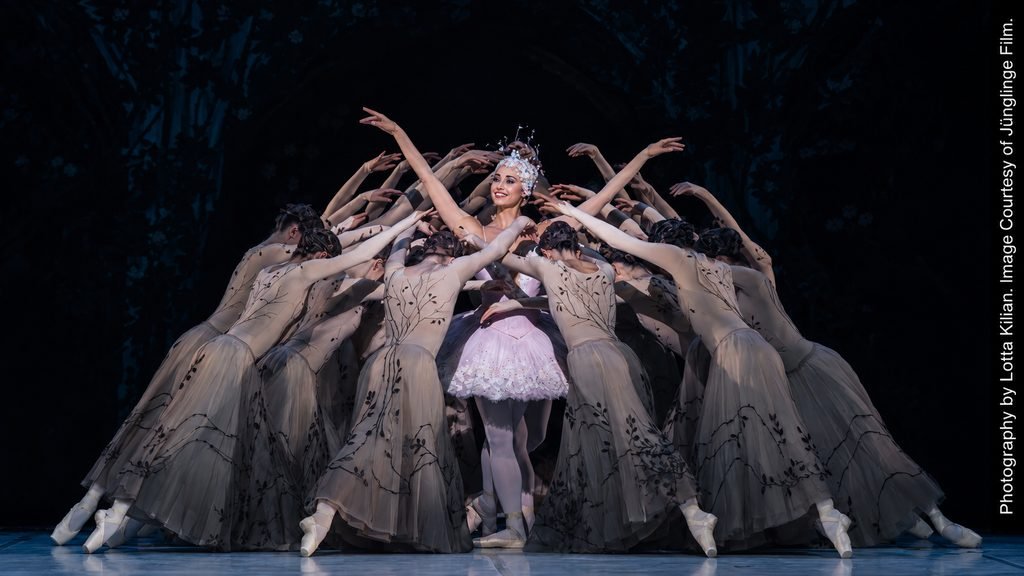
I kept switching between binoculars and spectacles. In wide shot, the dancers glistened in immaculately synchronised formations. In extreme close-up, they were sweating like — well — ballet dancers doing pirouettes. I could see the painted faces, the concentration, the perspiration, the tiniest exchanges of expression. I was privy to another, more intimate performance inside the grand circus.
Those bodies seemed to be negotiating new terms with gravity: skimming the floor, springing skywards, then swooping down like hummingbirds darting between flowers. It was punishing athleticism disguised as effortless elegance. Gesture was doing the work of dialogue faster than I could follow. What, I wondered, would Brecht have made of this gestus on steroids?
And carrying it all was Pyotr Ilyich Tchaikovsky’s magnificent score, performed live by Orchestra Victoria. This was no polite background music. The score surged, teased, threatened — and sometimes gave the dancers what sounded like an extra pair of wings.
During the intervals, even the orchestra pit became an aural theatre with the musicians testing notes and doodling fragments before the next great wave. I resolved to hear the score on its own: there was simply too much to absorb in three pacey acts.
There were two intervals, and I needed both just to catch my breath. Behind me, someone declared that Stuttgart was good, but The Australian Ballet was better. Now I wouldn't presume to referee that contest without appreciating the finer distinctions of style and technique. All I knew was that this company was thrilling this delighted novice without requiring me to consult an instruction manual.
By Act Three, the story had largely done its duty. Now it was: forget the plot and bring on the balletic intrusions! Solos and duets piled up in a parade of bravado — occasionally topless but never legless — each new feat daring the last to raise its game. The orchestra raced on, the stage blazed with colour, and the dancers appeared to have secured special exemptions from the laws of gravity.
The applause was thoroughly deserved. An encore? Please, no. That would have been torture — for the dancers, if not for us.
So, like a good circus, a great ballet doesn't demand that you arrive knowing all its tricks. It invites you to look, listen and marvel.
I went on a blind date with Sleeping Beauty, lost my balletic virginity, and left the Regent Theatre thoroughly dazzled, slightly breathless, with a spring in my step — and still trying to find words worthy of all that movement.