
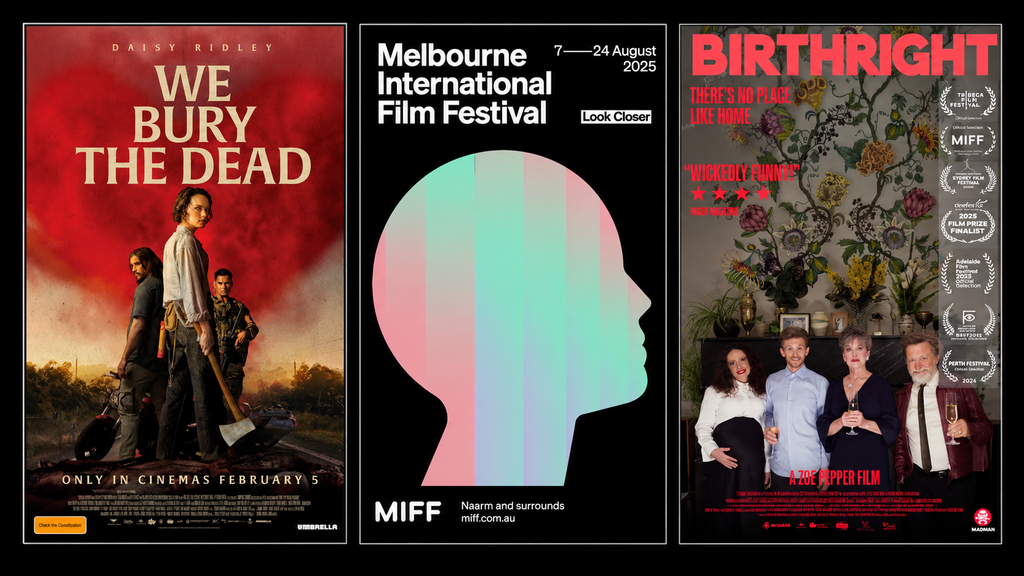
With 275 feature films, shorts and “extended reality experiences” to choose from at the Melbourne International Film Festival — not to mention talks, retrospectives and live-score events — I headed first to the MIFF Festival Hub at ACMI to get my bearings. Described as “a home for audiences to eat, drink and discuss cinema”, it seemed the ideal place to dip my beak into the programme and, borrowing MIFF’s invitation, “Look Closer” at which Australian films I wanted to devour.
A couple of drinks in, my distinctly dystopian worldview homed in on the Australian zombie-apocalypse horror film We Bury the Dead, directed by Zak Hilditch, whose These Final Hours received support from the MIFF Premiere Fund in 2013. Could the film live up to its horrific promise?
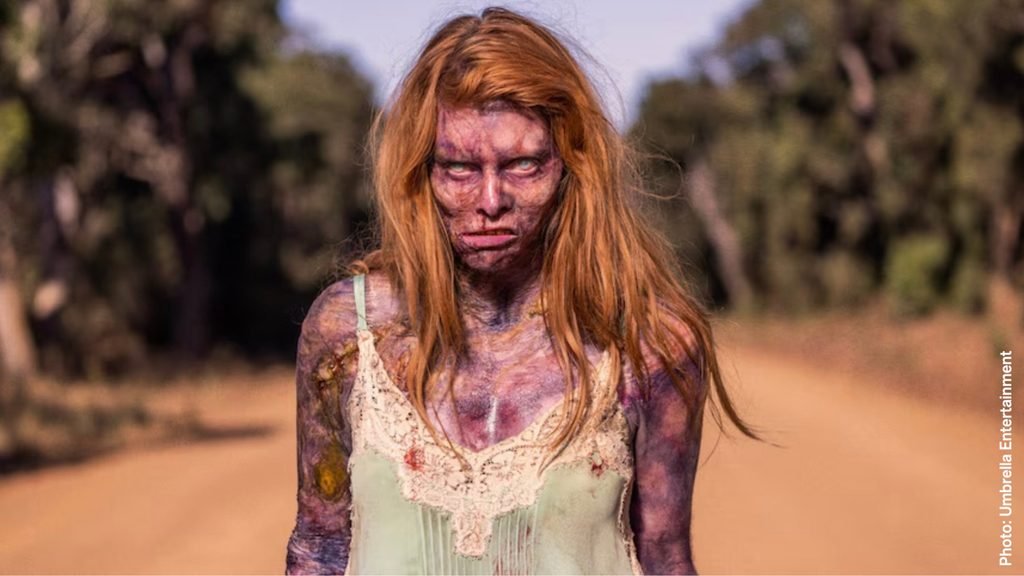
The story wastes little time finding out. A catastrophic military accident in Tasmania has left much of the population dead — except that some of the corpses have an inconvenient habit of getting back up. Daisy Ridley, best known to millions as Rey in Star Wars: The Force Awakens, plays Ava, a grieving American who joins a body-retrieval unit in the hope of finding her missing husband among the dead.
I’m not generally known for being frightened by scary movies, but I could feel my body tensing as these teeth-grinding, bone-crunching creatures demonstrated just how dead keen they were to attack the soldiers charged with neutralising them — or the rescue workers still hoping there might be something left to save. Yet Hilditch is less interested in adding another zombie movie to the pile than in using the genre to explore grief, loss and our need for closure.
Ava finds an unlikely companion in Clay, played by Brenton Thwaites, a laid-back local helping collect bodies from abandoned homes. Mark Coles Smith plays soldier Riley, who initially appears to be another grief-stricken survivor — until a deeply uncomfortable encounter in his home reveals something considerably darker.
Hilditch described the film after the screening as a low-budget production, which makes its atmospheric achievement all the more impressive. Imaginative art direction and cinematography conjure a convincingly ravaged Tasmania, while Oscar-nominated prosthetics designer Jason Baird gives the undead an unnervingly physical presence.
But it was Duncan Campbell’s sound design that really got under my skin. The grinding of zombie teeth preceding an attack becomes an almost Pavlovian warning: hear that noise and brace yourself.
Eventually Ava discovers the truth about the husband she has been risking her life to find — and with it comes an unexpected liberation from the grief driving her journey. Then the film twists once more. Just when the audience seems primed for an appropriately bleak conclusion, Hilditch leaves us with an improbable spark of hope amid the rubble: a surviving baby and the possibility of a new beginning.
So We Bury the Dead ultimately turns out to be less about the walking dead than about what the living do with grief — and whether, after catastrophe, we can find sufficient reason to begin again. If only some of the real-life apocalypses unfolding today could end quite so optimistically.
If Zak Hilditch’s film imagined Tasmania after an apocalypse, Zoe Pepper’s feature debut Birthright finds another form of Australian horror much closer to home: trying to find somewhere affordable to live.
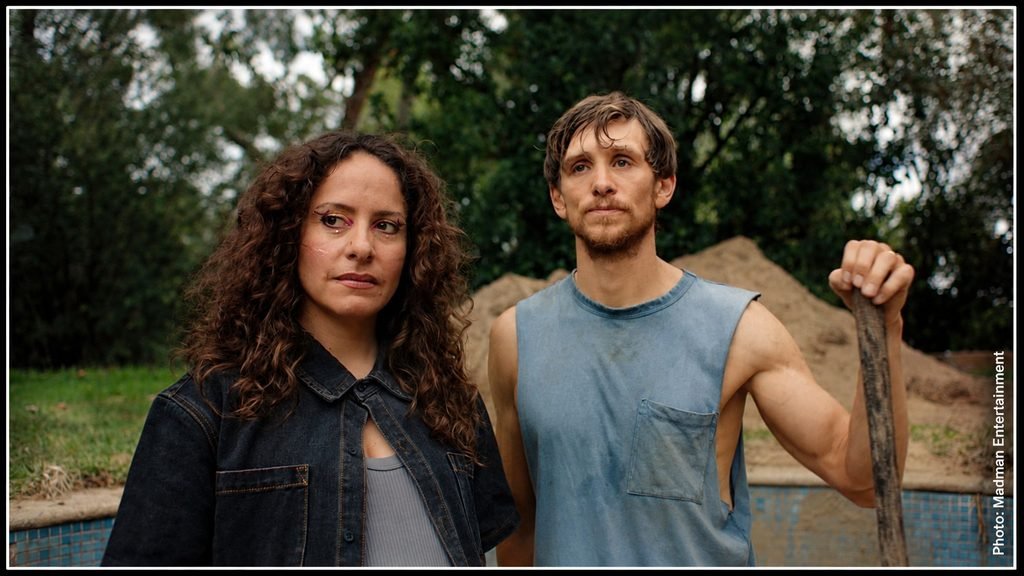
Cory and his heavily pregnant wife Jasmine are unemployed, evicted and rapidly running out of options. Their solution is to retreat to the comfortable home of Cory’s parents, Richard and Lyn. What begins as an apparently temporary family arrangement soon exposes a much bigger fault line.
On one side are thirtysomethings Cory and Jasmine, confronting a housing market and economic reality radically different from the one their parents entered at the same age. On the other are Richard and Lyn, comfortably established and considerably less sympathetic to their son’s predicament than he might have hoped.
Director Zoe Pepper turns that recognisably Australian generational argument into a theatrical, pitch-black comedy in which irritation escalates into resentment — and resentment acquires increasingly Gothic dimensions.
The casting gives the film a distinctly ensemble feel, with exquisitely timed comic performances from Australian actors Travis Jeffery, Maria Angelico, Michael Hurst and Linda Cropper, who clash and burn their way through an emotional roller-coaster that at times feels like an Australian take on Who’s Afraid of Virginia Woolf?
The father-and-son battle is particularly fertile territory. Richard regards Cory’s predicament as something approaching a failure of character; Cory sees the security enjoyed by his parents as something his own generation has effectively been locked out of. Even the family home becomes contested territory.
A wonderfully absurd symbol is the family swimming pool that Cory remembers from childhood and attempts to excavate again — as though literally digging through the backyard might somehow recover the security and optimism he associates with growing up there.
In another particularly quirky episode, Richard’s vintage, disco-era, deep-red tasselled leather jacket becomes an unlikely generational battleground: a cherished relic of baby-boomer cool defended from a squeezed millennial son who can’t afford a home and, apparently, isn’t even entitled to the jacket.
That is where Birthright becomes more interesting than a simple baby-boomer-versus-millennial satire. Beneath the jokes lies a question about what parents believe they owe their children — and what adult children can reasonably expect to inherit from the generation before them.
The title itself starts doing some heavy lifting. What exactly is our birthright? Property? Security? Family support? The opportunity to build something for ourselves? Or merely the expectation that every generation should somehow manage with whatever economic hand it happens to have been dealt?
Pepper pushes these tensions into deliberately heightened territory until domestic comedy begins to resemble Australian Gothic. What starts with a young couple needing somewhere to sleep becomes something considerably nastier: a battle over money, entitlement, memory and the increasingly unequal economic circumstances separating generations of the same family.
The sting-in-the-tail ending of what is billed as a “destructive, pitch-black generational war” drives Cory — increasingly obsessed with securing a piece of his parents’ wealth — to trigger an extreme and explosive family collapse. The message is brutally simple: no one wins when millennial despair collides with baby-boomer entitlement so violently that the family ideal itself becomes collateral damage, leaving both generations scarred almost beyond recognition.
And perhaps that is Birthright’s darkest joke: you don’t need zombies to make an Australian horror film. Sometimes all you need is the volatile ups and downs of the inner-suburban housing market — and parents and children who can no longer agree on what they owe one another.